
Searching for free OnlyFans pages often turns up profiles that look convincing at first glance but fall apart under basic checks. The platform has no built-in discovery feed or directory, which is exactly why ranking sites exist to point users toward pages worth following. That same gap also makes it easy for impersonators to copy a look and wait for followers. This article outlines a short screening routine that catches most fakes before you follow or pay.

A fake page rarely fails every check at once. Most leave two or three detectable traces, and catching any one of them is usually enough to walk away. The sections below move from profile-level signals to message behaviour and payment requests. BestOnlyFans collects these signals so readers can compare pages without guessing.
Before any of that, it helps to know what a real free page actually is. A free page is a profile with the subscription price set to $0, and the creator earns through pay-per-view messages and tips instead of a monthly charge. Paid pages run from a $4.99 minimum to a $49.99 maximum, with most between $4.99 and $15. There is no legitimate base price below $4.99, and only promotional first months may dip under it.
That pricing floor matters because fake pages frequently invent discounts that do not exist on the real account. If a profile claims a permanent price under $4.99, the number itself is the tell. BestOnlyFans flags this pattern in its page notes.
Impersonation types
Impersonation on free pages follows a small number of repeating patterns. The most common is a duplicate handle that swaps a letter or adds a word. A second pattern copies a real creator’s display name and bio while using a different photo set. A third pattern uses a generic model image that appears across several accounts.
A fourth pattern builds an entirely fictional persona with no link to any existing creator. These are harder to spot because there is nothing to compare against. The table below lists the concrete values that separate genuine pages from each pattern.
| Signal | Genuine page | Fake page |
| Subscription price | $0 for a true free page, or $4.99 to $49.99 paid | Claims a permanent price below $4.99 |
| Handle | Consistent across linked platforms | Slight spelling variation of a known handle |
| Bio links | Point to the same handle elsewhere | Broken, redirected, or missing |
| Post history | Long, dated, consistent | Short, recent burst, or scraped |

Handle checks
A handle check takes under a minute and settles most doubts. Search the exact handle on two or three other platforms and compare what comes back. Real creators tend to reuse the same name, or state clearly that they do not. Fakes usually vanish the moment you look outside the platform.
Also compare the display name against the handle. Mismatches are common on copies, because the display name is easy to duplicate while the handle is fixed. The table below lists the exact-match checks worth running.
| Check | What to look for | Red flag |
| Exact handle search | Same name on other platforms | No results, or results for a different person |
| Display name vs handle | They refer to the same identity | Display name copied, handle unrelated |
| Cross-linked accounts | Links resolve and match | Links removed or pointing elsewhere |
| Posting history | Months or years of dated posts | Account created recently with no history |

Content rhythm
Posting cadence is one of the harder things to fake over time. Scraped pages reuse a small pool of images and repost them on a loop. Genuine pages show variation in framing, setting, and timing. The list below covers what to check.
- Post dates spread across weeks or months rather than one recent burst
- Visible changes in lighting, location, and framing over time
- Captions that reference ongoing events rather than generic text
- Occasional gaps that match a normal posting schedule
A page with fifty posts uploaded in two days and nothing since is a scraped page in most cases. A page with steady output across a year is far more likely to be genuine.

Verification cues
Verification is not a guarantee, but it correlates with genuine accounts. Platforms tend to verify identities that persist over time, and impersonators rarely keep an account alive long enough to qualify. The list below covers profile features worth checking.
- Account age measured in months or years rather than days
- A verified badge or equivalent platform confirmation
- Two-step authentication enabled on the account, visible in settings guidance
- Consistent identity across linked platforms
Tip: turn on two-step authentication on your own account before following anyone new. It prevents a compromised login from being used to follow or message pages on your behalf.
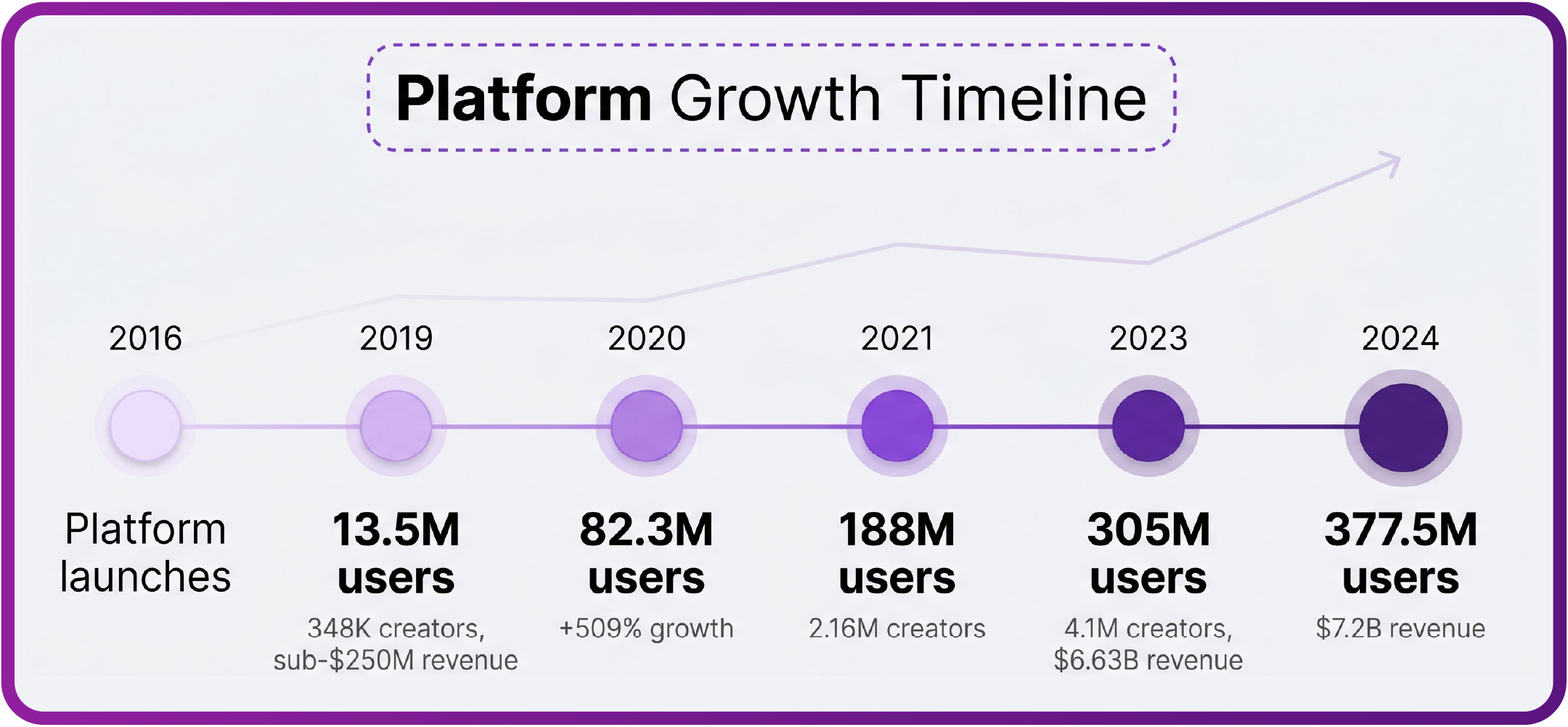
Platform growth has made impersonation more common as the user base expanded. The chart below shows how the audience grew year by year. For a starting point, free onlyfans subscription meaning collects free pages.

Contact pressure
Message behaviour is where most fake free pages reveal themselves. Pressure to move off the platform is the single strongest signal. The list below covers the early message patterns tied to scam profiles.
- Immediate requests to continue the conversation on another app
- Urgency about a limited offer that expires within hours
- Requests for personal details unrelated to the page
- Messages that ignore what you actually wrote and repeat a script
Genuine creators do send pay-per-view messages, because that is how free pages earn. The difference is that a real page keeps the transaction on the platform and does not rush you. A page that pushes you elsewhere within the first few messages is not worth following.

Payment requests
Off-platform payment is the clearest warning sign on any page. The platform takes a 20% fee on subscriptions, tips, and pay-per-view, and the creator keeps 80%. That fee is the reason a genuine creator has no incentive to move a payment outside the system. A fake page has every incentive to do so, because an outside payment cannot be reversed or reported.
Any request to pay by gift card, bank transfer, or a payment app is a scam signal on its own. The risk level rises with the amount and with how quickly the request arrives after you follow. When a creator raises the subscription price, auto-renew stops and existing access lasts until the current paid period ends, so there is never a legitimate reason to send money outside the platform to preserve access.
If a page asks for payment details that the platform never requires, treat the request as final proof. There is no scenario where a real page needs your card number sent through a message.
Report path
Reporting a suspected fake page is straightforward and worth doing even if you only lost time. The list below covers the steps.
- Open the profile and locate the report option in the page menu
- Select the category that matches impersonation or scam behaviour
- Add the specific evidence, such as the copied handle or the payment request
- Submit the report and keep a screenshot of the profile for reference
Reports from multiple users carry more weight than a single submission. If you have the time, note the exact handle so the platform can match it against existing records. This is also where understanding the free onlyfans subscription meaning helps, because a true free page never requires a payment to follow.
Recovery steps
If you already followed or paid a fake page, the actions below limit the damage. The list covers the order worth following.
- Unfollow the page and block the account
- Cancel any subscription through your own account settings
- Report the payment to your bank or payment provider if money left the platform
- Change your password and enable two-step authentication
Cancelling stops future renewals, and existing access ends when the current paid period finishes. Money sent off-platform is much harder to recover, which is why the payment rule matters more than any other check. BestOnlyFans recommends treating any off-platform request as the point where screening ends.
The revenue split below shows why outside payments are so attractive to fake pages, and why the platform fee is a useful signal in itself.
FAQ
Can a genuine free page ever charge below $4.99?
Only through a promotional first month. There is no base price below $4.99, so a permanent price under that figure is a red flag.
Why do fake pages push pay-per-view so hard?
Pay-per-view and tips are how free pages earn, but a fake page pushes them immediately and often asks for payment outside the platform, where it cannot be reversed.
What happens to my access if I report and cancel?
Reporting does not affect your access. Cancelling stops auto-renew, and access lasts until the current paid period ends.
Do I need a ranking site to find pages?
No, but the platform has no discovery feed or directory, so ranking sites fill that gap by collecting pages in one place.